
June 3, 2026 · Avecas Technologies
Beyond DRAM: The Emerging Memory Technologies Reshaping Computing
For decades, Dynamic Random Access Memory (DRAM) has been the workhorse of modern computing. From smartphones and laptops to AI accelerators and hyperscale data centers, DRAM provides the speed required for today’s demanding applications.
However, the explosion of artificial intelligence, edge computing, autonomous systems, and cloud infrastructure is exposing DRAM’s limitations. High power consumption, volatility, scaling challenges, and increasing manufacturing complexity are driving researchers and semiconductor companies to explore alternative memory technologies.
The next generation of memory is not about replacing DRAM overnight it is about creating new memory layers that combine speed, density, endurance, and persistence in ways traditional memory cannot.
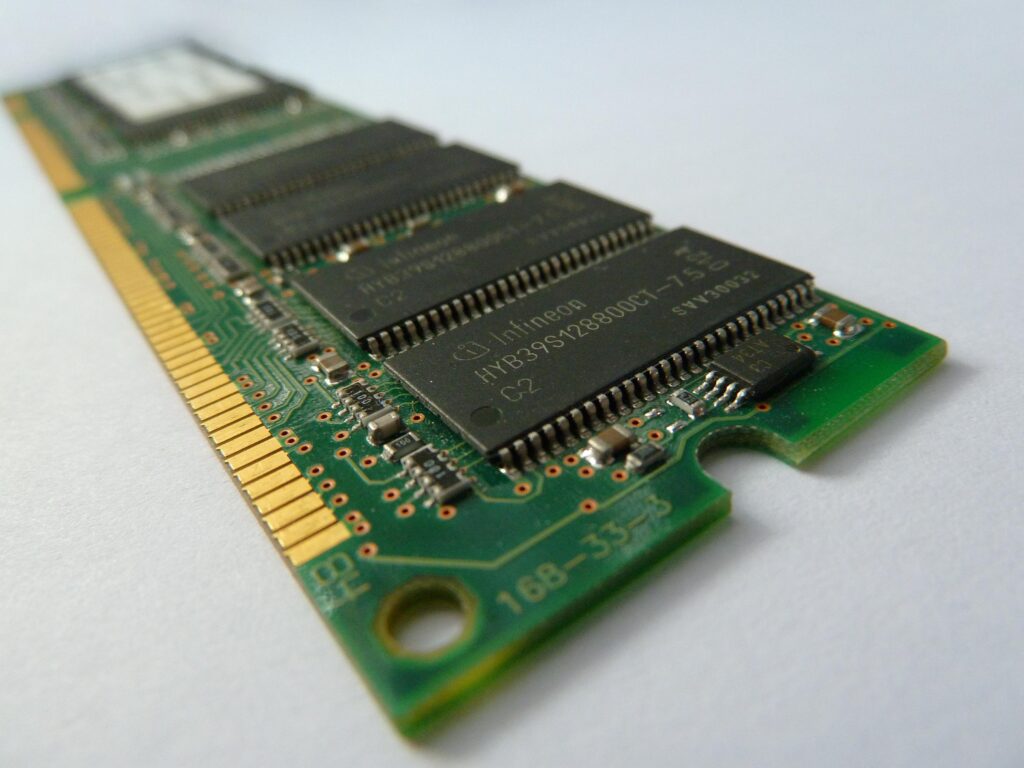
The search for better memory has led to three promising technologies: Magnetoresistive RAM (MRAM), Resistive RAM (ReRAM), and Phase-Change Memory (PCM).
Magnetoresistive RAM (MRAM)
MRAM stores information using magnetic states rather than electrical charges. This allows data to remain intact even when power is removed, making MRAM a non-volatile memory technology.
Unlike conventional memories that suffer from leakage currents and refresh requirements, MRAM offers near instant access while maintaining data persistence. The most commercially successful implementation today is Spin-Transfer Torque MRAM (STT-MRAM), which leverages electron spin to switch magnetic states efficiently.
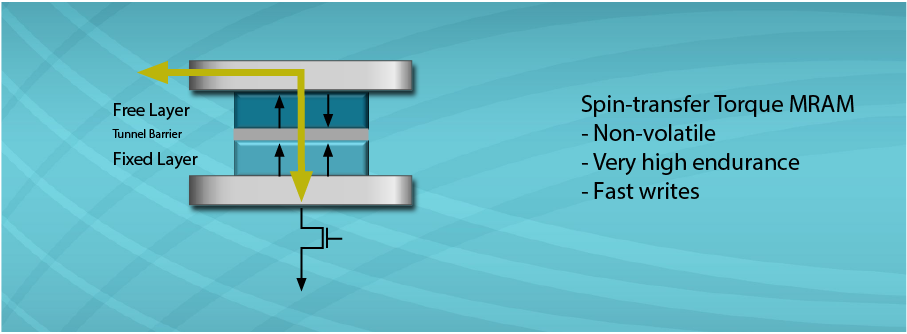
At the heart of MRAM lies the Magnetic Tunnel Junction (MTJ), a nanoscale structure consisting of two magnetic layers separated by a thin insulating barrier. Changes in magnetic orientation alter resistance, allowing data to be stored as binary states.
The technology has already moved beyond laboratories. Companies such as Everspin have successfully commercialized MRAM products for industrial, aerospace, networking, and enterprise applications.
Why MRAM Matters
- Non-volatile operation
- Extremely high endurance
- Fast read and write performance
- Reduced standby power consumption
- Strong suitability for embedded memory applications
As semiconductor nodes continue shrinking, MRAM is increasingly viewed as a viable replacement for embedded SRAM and Flash in many applications.
Resistive RAM (ReRAM)
Resistive RAM, commonly known as ReRAM, stores information by changing the resistance of a dielectric material. Instead of relying on charge storage, ReRAM forms and dissolves conductive filaments inside the memory cell.
This switching mechanism enables compact cell structures, low operating voltages, and potentially very high storage densities.
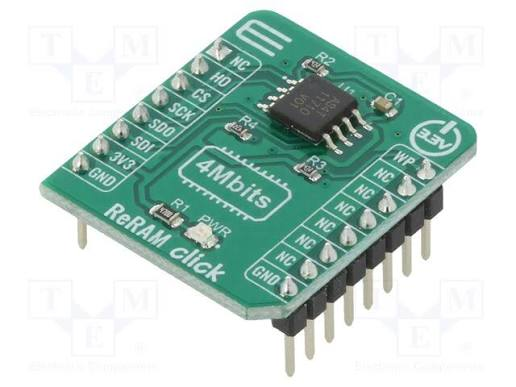
One of the most exciting aspects of ReRAM is its similarity to biological synapses. The analog behavior of resistance states allows it to perform computations directly within memory arrays, significantly reducing data movement.
This capability has made ReRAM a leading candidate for neuromorphic computing and in-memory AI acceleration.
Why ReRAM Matters
- High density memory arrays
- Low power operation
- Fast switching speeds
- Excellent scalability
- Strong potential for AI and neuromorphic systems
As AI workloads continue growing, technologies capable of combining storage and computation could fundamentally transform system architectures.
Phase Change Memory (PCM)
Phase Change Memory stores data by switching a material between amorphous and crystalline states. These two physical states exhibit different electrical resistances, enabling binary storage.
Unlike traditional memories, PCM combines persistence with relatively fast access times, creating an attractive middle ground between DRAM and NAND Flash.
One of the most visible demonstrations of PCM technology was Intel’s Optane product family, built on 3D XPoint architecture.
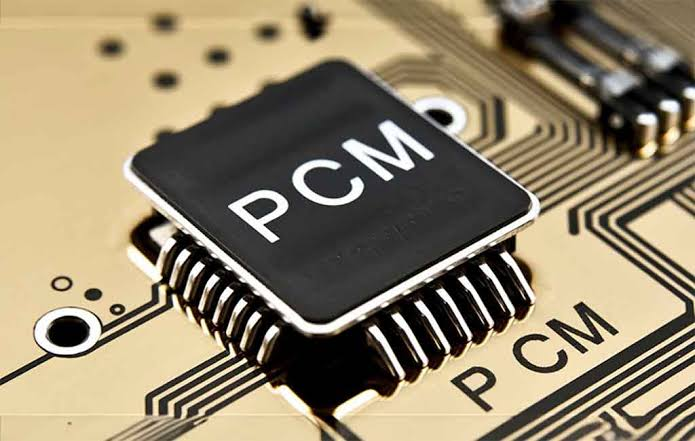
Optane showcased how persistent memory could accelerate databases, virtualization platforms, and enterprise workloads by dramatically reducing storage latency.
The underlying 3D XPoint technology represented years of innovation in material science, device engineering, and manufacturing.
Why PCM Matters
- Non-volatile operation
- High endurance compared to Flash
- Lower latency storage
- Potential memory-storage convergence
- Enterprise-class performance characteristics
Although commercial adoption faced challenges, PCM remains one of the most influential demonstrations of next-generation memory technology.
The future of computing may not be defined solely by faster processors. Increasingly, system performance is constrained by how quickly data can move between memory and compute units.
This challenge, often referred to as the memory wall, is becoming one of the biggest obstacles in modern computing.
Emerging memories such as MRAM, ReRAM, and PCM offer the possibility of fundamentally rethinking system architecture. Instead of treating memory and storage as separate layers, future systems could integrate persistent, high-speed memory directly into the computing fabric.
Such architectures could enable:
- Faster AI training and inference
- Reduced energy consumption
- Improved cloud infrastructure efficiency
- Real-time edge computing capabilities
- New forms of memory-centric system design
The impact extends beyond individual devices to entire data center ecosystems.
Conclusion
The race toward next-generation memory is one of the most important technological battles in the semiconductor industry.
MRAM promises speed and endurance. ReRAM offers density and AI acceleration opportunities. PCM demonstrates the potential for memory-storage convergence.
Each technology addresses a different set of challenges, and it is likely that future computing systems will incorporate multiple memory types working together rather than relying on a single universal solution.
As artificial intelligence, high-performance computing, and data-intensive applications continue expanding, the innovations happening in memory technology today will play a critical role in defining tomorrow’s computing landscape.
The future of computing is not just about faster processors it is about smarter memory.
Looking to build hands-on VLSI skills? CourseTron offers industry-aligned courses in VLSI design, verification, and semiconductor engineering.