Technical starting point
System specification, representative workloads, environment and acceptance limits.

SYSTEM VALIDATION
Evaluate integrated behaviour against user and operating requirements.
Discuss your requirements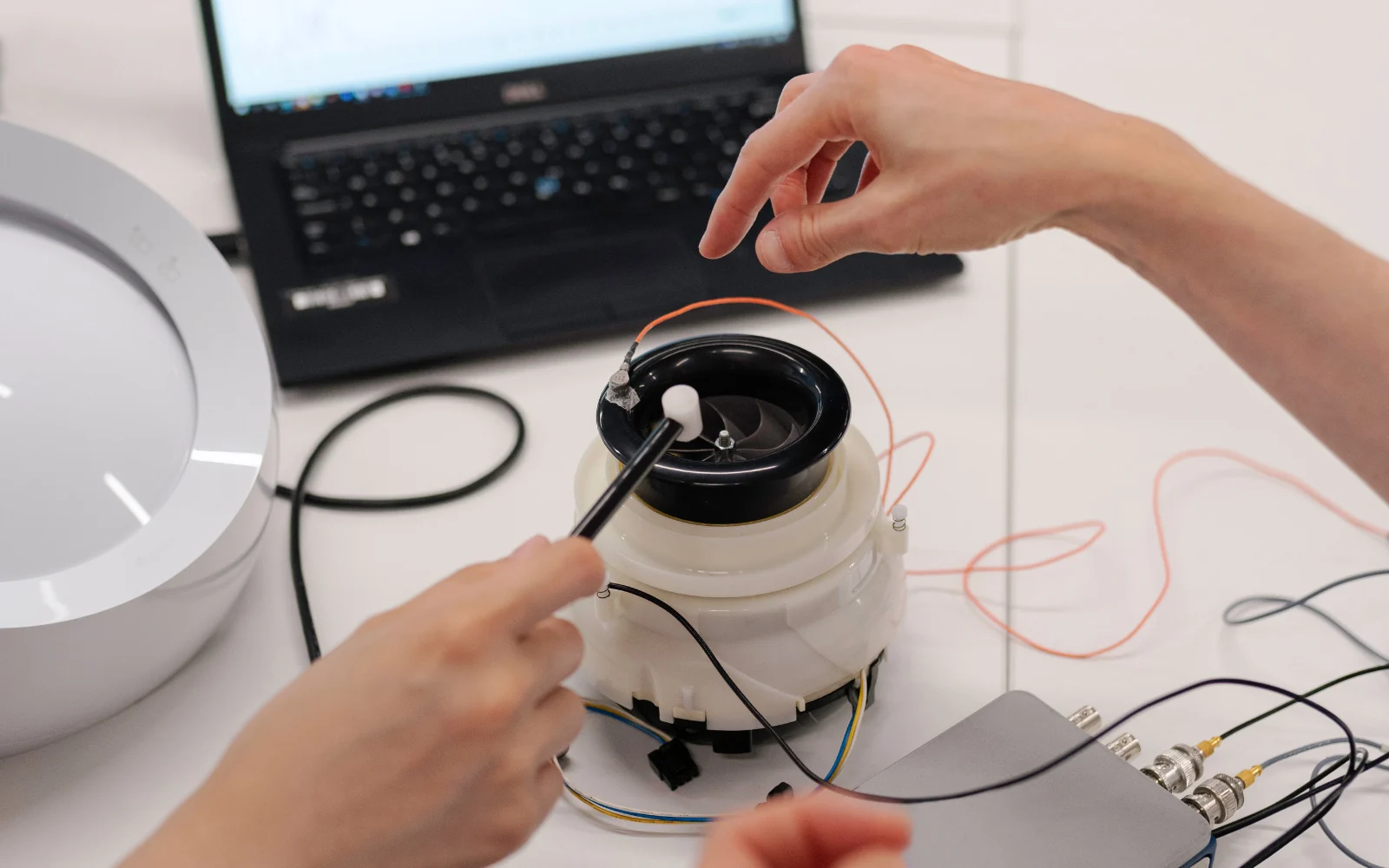
Illustrative engineering photography.
THE ENGINEERING SCOPE
System specification, representative workloads, environment and acceptance limits.
Boundary conditions, sustained operation, data integrity and recovery time.
Validation plan, results, defects and acceptance summary.
CLIENT GUIDE
Use these technical checkpoints to make the first project review productive.
HOW WE WORK
The initial review establishes the baseline using system specification, representative workloads, environment and acceptance limits. Record gaps and dependencies before implementation.
Carry out the agreed work against the reviewed baseline. For system validation, keep the interfaces and configuration used by this stage visible to the receiving team.
Retain the intermediate artifacts and review boundary conditions, sustained operation, data integrity and recovery time. Investigate failures before using these results as an input to the next stage.
Package validation plan, results, defects and acceptance summary. Review unresolved findings against the agreed acceptance criteria and assign ownership for follow-up.
PROJECT DECISIONS
Use these gates to agree readiness, review evidence and responsibility at each stage.
Are the starting inputs complete enough to proceed?
System specification, representative workloads, environment and acceptance limits.
Record input revisions, missing material and who can resolve each dependency.
Has the work addressed the agreed technical objective?
Evaluate integrated behaviour against user and operating requirements.
Keep the intermediate artifacts with review comments and the decisions that changed the design.
Can the result be reproduced and interpreted?
Boundary conditions, sustained operation, data integrity and recovery time.
Capture the configuration, expected result, observed result and unresolved findings.
Can the receiving team use the delivery package?
Validation plan, results, defects and acceptance summary.
Review build or execution instructions, known limitations and ownership of follow-up actions.
INPUTS & OUTPUTS
The final statement of work defines the scope and acceptance criteria.
TECHNICAL DECISIONS
Evaluate integrated behaviour against user and operating requirements.
The work starts from system specification, representative workloads, environment and acceptance limits. The team should identify the authoritative revision of each input and record any assumptions needed to proceed. This prevents a later result from being interpreted against a different specification or configuration.
Acceptance scenarios should include the environment the product will actually encounter.
The review centres on boundary conditions, sustained operation, data integrity and recovery time. Each finding should identify the input revision, observed behaviour and supporting evidence. Distinguish a confirmed defect from a configuration issue, an unsupported case or an open engineering question before deciding how to resolve it.
The practical sequence is: create scenario matrix; execute functional tests; stress interactions; test recovery. Intermediate reviews allow the client to resolve decisions while changes are still manageable. If an input changes, identify the affected activities and repeat the checks that depend on it.
The expected package comprises validation plan, results, defects and acceptance summary. Acceptance criteria should specify what the receiving team needs to reproduce, inspect or integrate these artifacts. Include known limitations and outstanding actions in that package, rather than assuming that delivery of a file implies acceptance.
Embedded behaviour is shaped by the target hardware as well as application code. Keep the processor, board revision, memory map, boot flow and peripheral configuration visible in the project baseline. Define ownership of buffers and shared state across tasks, interrupts and DMA. Specify whether an API can block, which context may call it and how errors are reported to its caller.
Testing should follow the device lifecycle: startup, configuration, normal work, overload, low-power transitions, update and recovery. Host-side tests are valuable for deterministic logic, while target tests are needed for hardware timing and peripheral behaviour. Record which environment produced each result. A passing simulated test should not be presented as a measurement from the physical board.
Observe resource use under realistic contention, including stack and heap peaks, interrupt latency, queue growth and deadline misses. Inject failures where the product must recover: a disconnected peripheral, failed initialisation, timeout or interrupted update. Release notes should state the compatible hardware and configuration, how the image was built and how a previous known-good state can be restored when the product’s update design supports it.
A peripheral times out while an application task is being stopped. Check that callbacks cannot access released memory, locks are released and a later restart can initialise the device cleanly. Keep a repeatable fault-injection test alongside the normal transfer test. The exact sequence depends on the target platform and is agreed during implementation.
BEFORE WE BEGIN
A clear conversation is the start of a strong engineering relationship.
The starting review needs system specification, representative workloads, environment and acceptance limits. Share the current revision and known limitations so the scope reflects the actual design state.
The statement of work can define validation plan, results, defects and acceptance summary. The final package should include review results and any open actions.
Acceptance scenarios should include the environment the product will actually encounter.
The first work package can be a review of the available inputs and the engineering questions that must be resolved. Agree its boundaries, access requirements and expected findings before committing to a larger implementation. A review should leave an actionable list of decisions, dependencies and next steps.
Tie each finding to the relevant revision and supporting evidence. A change should identify the affected interfaces, activities and checks. Confirm its effect on scope and delivery with the responsible owner. At handoff, distinguish closed findings, accepted limitations and open work so that a file transfer is not mistaken for technical acceptance.
PUT THE WORKFLOW IN CONTEXT
Practical reading to help prepare your project discussion. Studies are illustrative; they do not report client results.
What an embedded release should let the next engineer reproduce ↗YOUR NEXT CHAPTER STARTS HERE
Bring us your engineering challenge.
Let’s define the path from idea to implementation.