
June 12, 2026 · Avecas Technologies
High Bandwidth Memory (HBM): Powering the AI Era
The rapid growth of Artificial Intelligence (AI), machine learning, and high-performance computing has created an enormous demand for faster and more efficient memory technologies. Traditional memory architectures are struggling to keep up with the massive data processing requirements of modern AI workloads.
High Bandwidth Memory (HBM) has emerged as a revolutionary memory technology designed to overcome these limitations. By combining high-speed data transfer, increased memory capacity, and advanced 3D packaging, HBM is becoming a key technology powering the next generation of AI systems, GPUs, and data centers.
What is High Bandwidth Memory (HBM)?
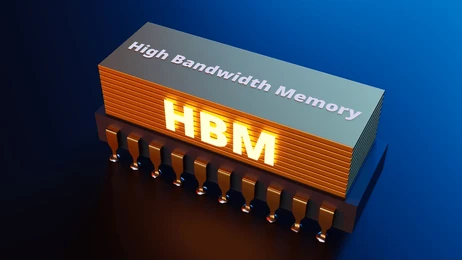
High Bandwidth Memory is an advanced type of DRAM technology that uses 3D stacking architecture to place multiple memory layers vertically and connect them using Through-Silicon Vias (TSVs).
Unlike traditional memory systems where data travels longer distances between processor and memory, HBM places memory closer to processing units, enabling faster communication and reduced power consumption.
Key benefits of HBM include:
- Extremely high data bandwidth
- Lower energy consumption
- Compact memory architecture
- Improved AI processing performance
Why Does AI Need HBM?
Modern AI models require processing billions of parameters and handling massive datasets. GPUs and AI accelerators need to access large amounts of data quickly to perform complex computations.
Traditional memory technologies often create a bottleneck because processors can process data faster than memory can supply it.
HBM solves this challenge by providing:
- Faster data movement
- Higher memory bandwidth
- Better performance for parallel workloads
- Efficient AI model training
This makes HBM an essential component in advanced AI infrastructure.
How HBM Technology Works
HBM uses a unique stacked memory design where multiple DRAM dies are placed on top of each other.
The architecture includes:
3D Memory Stacking
Multiple memory layers are vertically stacked, increasing capacity while reducing the physical footprint.
Through-Silicon Vias (TSVs)
Tiny vertical connections pass through silicon layers, allowing data to move between memory stacks at extremely high speeds.
Advanced Packaging
HBM is integrated with processors such as GPUs and AI accelerators using advanced packaging techniques, creating a high-performance computing solution.
Applications of HBM
Artificial Intelligence and Machine Learning
HBM is widely used in AI accelerators because AI training requires enormous memory bandwidth.
Applications include:
- Large language models
- Generative AI systems
- Deep learning platforms
- AI data centers
High-Performance Computing (HPC)
Scientific simulations, climate modeling, and advanced research require powerful computing systems. HBM enables faster processing of large datasets.
Graphics and Gaming
Modern GPUs use HBM technology to improve:
- Rendering speed
- Graphics performance
- Real-time processing
Future of HBM Technology
As AI continues to expand, the demand for higher memory bandwidth will keep increasing. Future generations of HBM are expected to deliver:
- Higher capacity
- Faster data transfer rates
- Better energy efficiency
- Improved AI acceleration
HBM will continue to play a major role in next-generation computing, supporting everything from AI applications to advanced semiconductor systems.
Conclusion
High Bandwidth Memory is transforming the way modern computing systems handle data. By bringing high-speed memory closer to powerful processors, HBM removes performance limitations and enables the growth of AI-driven technologies.
As the AI era continues to evolve, HBM stands as one of the most important semiconductor innovations, powering faster, smarter, and more efficient computing platforms.
Looking to build hands-on VLSI skills? CourseTron offers industry-aligned courses in VLSI design, verification, and semiconductor engineering.