

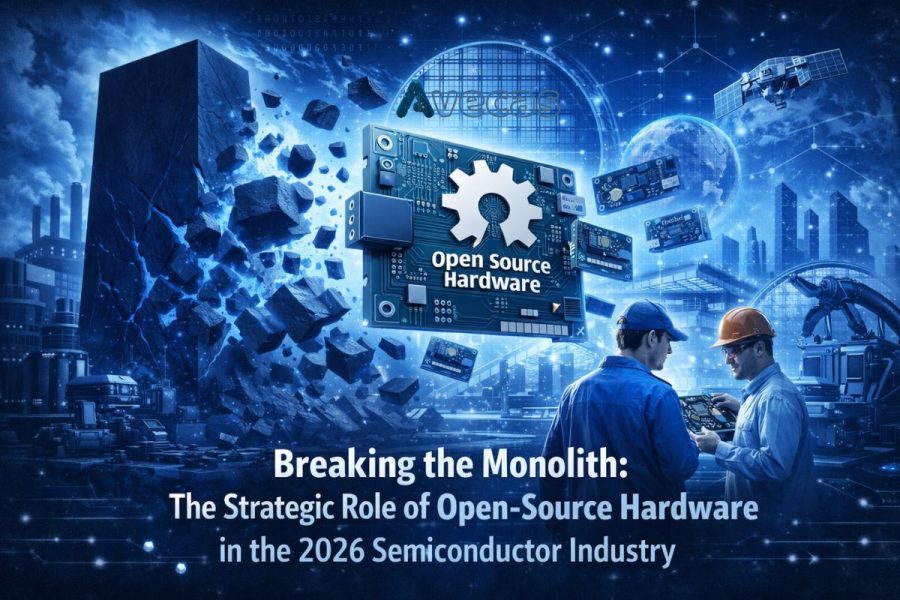
For the better part of four decades, the semiconductor industry operated behind a high wall of proprietary Intellectual Property (IP) and multi-million dollar licensing fees. If you wanted to design a chip, you had to negotiate complex contracts with a handful of dominant architecture providers. However, as we navigate the landscape of 2026, those walls are crumbling.
The rise of Open-Source Hardware (OSHW) has introduced a “Linux moment” for silicon. It is no longer just a hobbyist movement; it has become a strategic pillar for global tech giants, automotive manufacturers, and defense agencies. By providing a transparent, royalty-free foundation for chip design, open-source hardware is accelerating innovation and lowering the barrier to entry for the next generation of custom silicon.
1. The RISC-V Catalyst: A Universal Language
The most significant driver of the open-source hardware movement is the RISC-V Instruction Set Architecture (ISA). In 2026, RISC-V has moved from an academic curiosity to a mainstream powerhouse. Because it is an open standard, any company can build a custom processor without paying a cent in licensing fees to a central authority.
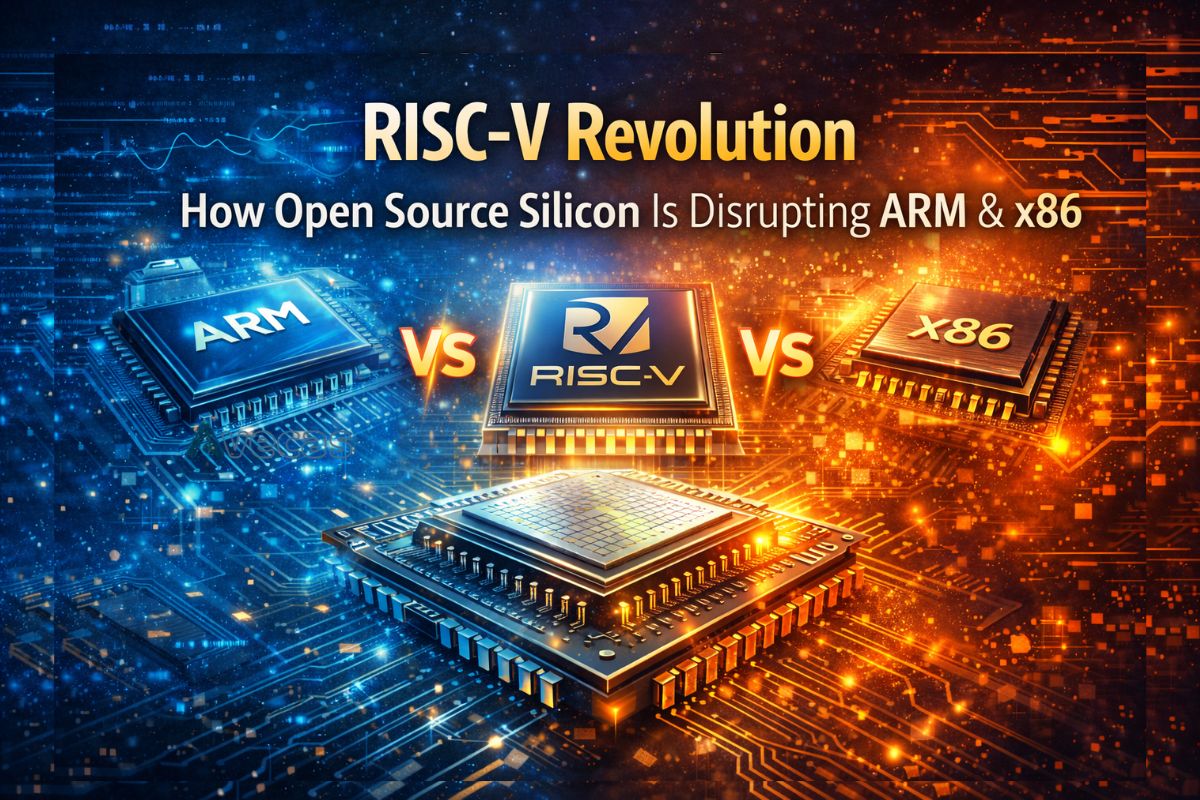
This modularity is the key. Companies can now “pick and choose” only the instructions they need for a specific task, such as AI acceleration or IoT sensing, reducing the silicon area and power consumption. In 2026, we are seeing RISC-V cores in everything from high-performance data center accelerators to the tiny controllers in smart home appliances.
2. Open-Source EDA: Leveling the Playing Field
Traditionally, the cost of Electronic Design Automation (EDA) software was a major hurdle for startups. A single seat for a top-tier design tool could cost more than a senior engineer’s annual salary.
The emergence of robust, open-source EDA tools and “PDKs” (Process Design Kits) has changed the math. Projects like OpenLane and the SkyWater 130nm open-source PDK allowed engineers to move from RTL to GDSII using entirely free tools. While the most advanced 2nm nodes still rely on proprietary software, these open-source flows have become the go-to choice for prototyping, research, and specialized “Long-Tail” IoT chips.
3. Supply Chain Resilience and Sovereignty
In the current global climate, technological sovereignty has become a matter of national security. Governments are realizing that relying on a single foreign entity for a proprietary CPU architecture is a strategic risk.
Open-source hardware provides a transparent alternative. Because the RTL (Register Transfer Level) code is open for inspection, security agencies can audit the design for “Hardware Trojans” or backdoors. This transparency is why we are seeing a surge in “National Processor” initiatives across Europe, India, and Asia, all built on open-source foundations. In 2026, the ability to “own” your architecture is seen as the ultimate insurance policy against geopolitical supply chain disruptions.
4. Accelerating the Custom Silicon Trend
We are currently in the era of “Domain-Specific Architectures.” General-purpose CPUs are no longer enough to handle the massive requirements of 2026 AI and machine learning workloads. Every major cloud provider now wants their own custom silicon.
Open-source hardware allows these companies to iterate faster. Instead of starting from a blank page, they can take a proven open-source core, add their proprietary “secret sauce” accelerators, and reach tape-out in record time. This “collaborative at the base, competitive at the top” model is exactly how the software industry scaled, and silicon is now following the same path.
5. Challenges: Fragmentation and Verification
As an industry writer, I must note that the open-source path is not without its hurdles. The biggest challenge in 2026 is fragmentation. With everyone able to modify the core, there is a risk that software compatibility could break.
Furthermore, Verification remains the “expensive” part of the process. While the design might be free, proving that it works perfectly across billions of cycles still requires massive computational resources and expertise. The industry is currently solving this by creating open-source verification IP and collaborative test suites, ensuring that “open” doesn’t mean “unreliable.”
Conclusion: The Collaborative Future of Hardware
The role of open-source hardware in 2026 is transformative. It is not replacing proprietary silicon, but it is providing a much-needed alternative that encourages competition and local innovation. It has turned the semiconductor industry from a closed club into an open ecosystem where the best ideas win, regardless of who owns the license.
For the next generation of engineers, the message is clear: the future of silicon is collaborative. By contributing to open-source hardware, you aren’t just learning; you are building the foundation of a more transparent, secure, and innovative global infrastructure. The silicon “magic” is now open for everyone to see, and that is a massive win for the future of technology.