Technical starting point
Threat model, safety requirements, trust boundaries and lifecycle assumptions.

SAFETY AND SECURITY DESIGN
Translate product protection requirements into reviewable design and verification work.
Discuss your requirements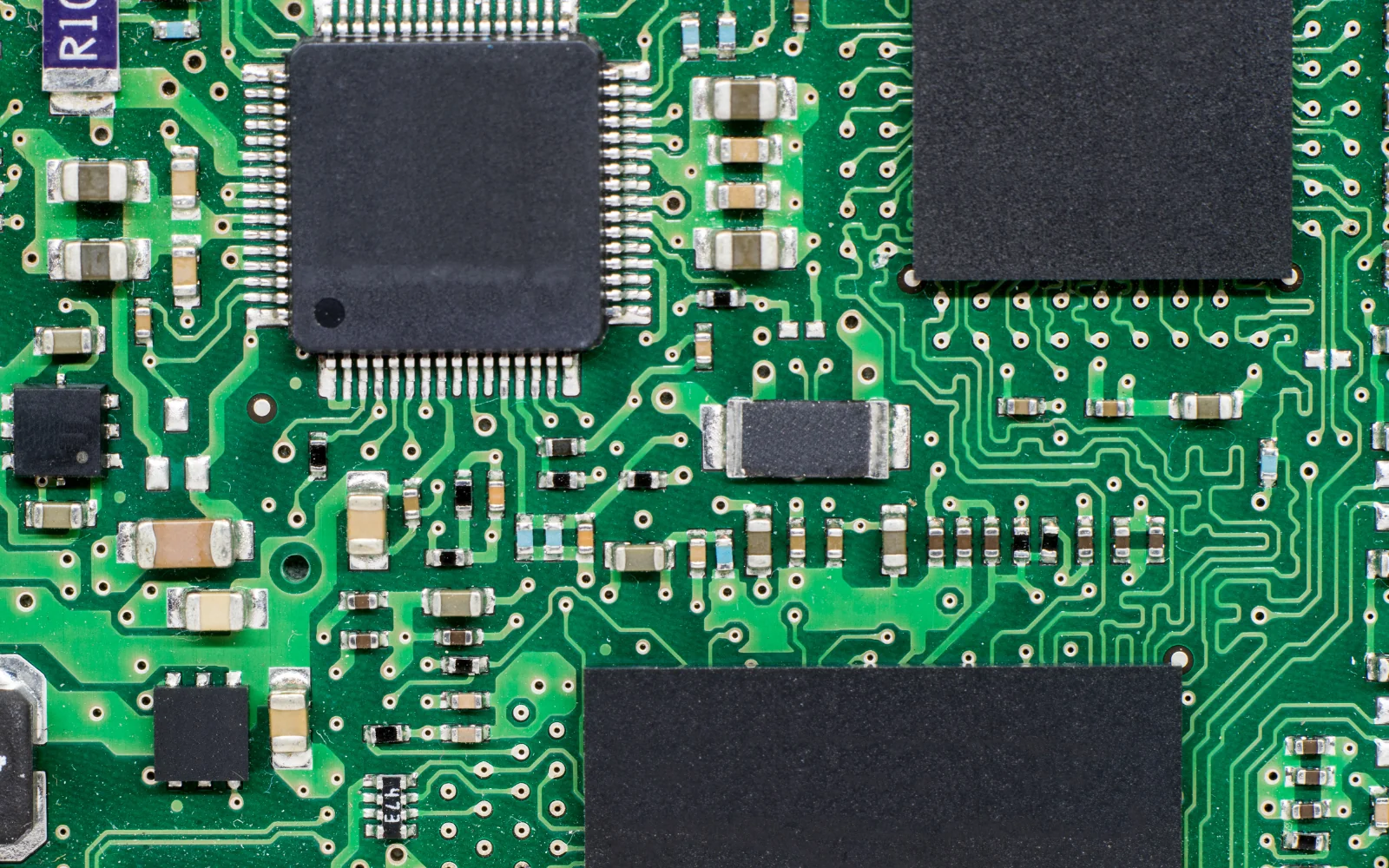
Representative photograph · Surface-mounted electronic components and routed interconnects.
THE ENGINEERING SCOPE
Threat model, safety requirements, trust boundaries and lifecycle assumptions.
Privilege boundaries, fault response, secret handling and requirement traceability.
Architecture notes, verification cases and unresolved risk register.
CLIENT GUIDE
Use these technical checkpoints to make the first project review productive.
HOW WE WORK
The initial review establishes the baseline using threat model, safety requirements, trust boundaries and lifecycle assumptions. Record gaps and dependencies before implementation.
Carry out the agreed work against the reviewed baseline. For safety and security design, keep the interfaces and configuration used by this stage visible to the receiving team.
Retain the intermediate artifacts and review privilege boundaries, fault response, secret handling and requirement traceability. Investigate failures before using these results as an input to the next stage.
Package architecture notes, verification cases and unresolved risk register. Review unresolved findings against the agreed acceptance criteria and assign ownership for follow-up.
PROJECT DECISIONS
Use these gates to agree readiness, review evidence and responsibility at each stage.
Are the starting inputs complete enough to proceed?
Threat model, safety requirements, trust boundaries and lifecycle assumptions.
Record input revisions, missing material and who can resolve each dependency.
Has the work addressed the agreed technical objective?
Translate product protection requirements into reviewable design and verification work.
Keep the intermediate artifacts with review comments and the decisions that changed the design.
Can the result be reproduced and interpreted?
Privilege boundaries, fault response, secret handling and requirement traceability.
Capture the configuration, expected result, observed result and unresolved findings.
Can the receiving team use the delivery package?
Architecture notes, verification cases and unresolved risk register.
Review build or execution instructions, known limitations and ownership of follow-up actions.
INPUTS & OUTPUTS
The final statement of work defines the scope and acceptance criteria.
TECHNICAL DECISIONS
Translate product protection requirements into reviewable design and verification work.
The work starts from threat model, safety requirements, trust boundaries and lifecycle assumptions. The team should identify the authoritative revision of each input and record any assumptions needed to proceed. This prevents a later result from being interpreted against a different specification or configuration.
Security and safety claims require scoped evidence; adding a mechanism does not by itself establish compliance.
The review centres on privilege boundaries, fault response, secret handling and requirement traceability. Each finding should identify the input revision, observed behaviour and supporting evidence. Distinguish a confirmed defect from a configuration issue, an unsupported case or an open engineering question before deciding how to resolve it.
The practical sequence is: allocate mechanisms; define interfaces; exercise abuse and fault scenarios; assemble evidence. Intermediate reviews allow the client to resolve decisions while changes are still manageable. If an input changes, identify the affected activities and repeat the checks that depend on it.
The expected package comprises architecture notes, verification cases and unresolved risk register. Acceptance criteria should specify what the receiving team needs to reproduce, inspect or integrate these artifacts. Include known limitations and outstanding actions in that package, rather than assuming that delivery of a file implies acceptance.
Automotive and safety-related engineering requires an explicit product boundary. Establish the functions in scope, relevant interfaces, operating assumptions and the responsibilities of each organisation. Requirements should come from the authorised system process. A software component cannot determine its own acceptable response to a hazardous condition without the surrounding system requirements and review ownership.
Integration work should address startup, shutdown, communication loss, invalid inputs and degraded modes as well as nominal operation. Keep configuration versions, network definitions and diagnostic behaviour aligned across components. Trace a requirement to the implementation decision and the evidence used to review it. Where a requirement changes, identify which analyses, tests and documents depend on that requirement.
Agree the applicable assessment process with the client and the responsible specialists. Engineering assistance can produce scoped analyses, implementation artifacts and test evidence, but it does not itself confer certification. Review unresolved assumptions and limitations explicitly. Any test involving real equipment must use the approved operating envelope and safety procedures for that equipment.
An ECU receives stale sensor data after a network interruption. The system requirements should define detection, diagnostics and the permitted degraded behaviour. Test the timing of that transition and the conditions for recovery, not only the eventual fault flag. This example describes verification planning and does not replace a safety analysis or product-specific acceptance process.
BEFORE WE BEGIN
A clear conversation is the start of a strong engineering relationship.
The starting review needs threat model, safety requirements, trust boundaries and lifecycle assumptions. Share the current revision and known limitations so the scope reflects the actual design state.
The statement of work can define architecture notes, verification cases and unresolved risk register. The final package should include review results and any open actions.
Security and safety claims require scoped evidence; adding a mechanism does not by itself establish compliance.
The first work package can be a review of the available inputs and the engineering questions that must be resolved. Agree its boundaries, access requirements and expected findings before committing to a larger implementation. A review should leave an actionable list of decisions, dependencies and next steps.
Tie each finding to the relevant revision and supporting evidence. A change should identify the affected interfaces, activities and checks. Confirm its effect on scope and delivery with the responsible owner. At handoff, distinguish closed findings, accepted limitations and open work so that a file transfer is not mistaken for technical acceptance.
PUT THE WORKFLOW IN CONTEXT
Practical reading to help prepare your project discussion. Studies are illustrative; they do not report client results.
Building an end-to-end latency budget for edge AI ↗YOUR NEXT CHAPTER STARTS HERE
Bring us your engineering challenge.
Let’s define the path from idea to implementation.