Technical starting point
Baseline database, requested change, failing paths and signoff setup.

ECO AND CLOSURE
Apply controlled design changes while checking their functional and implementation impact.
Discuss your requirements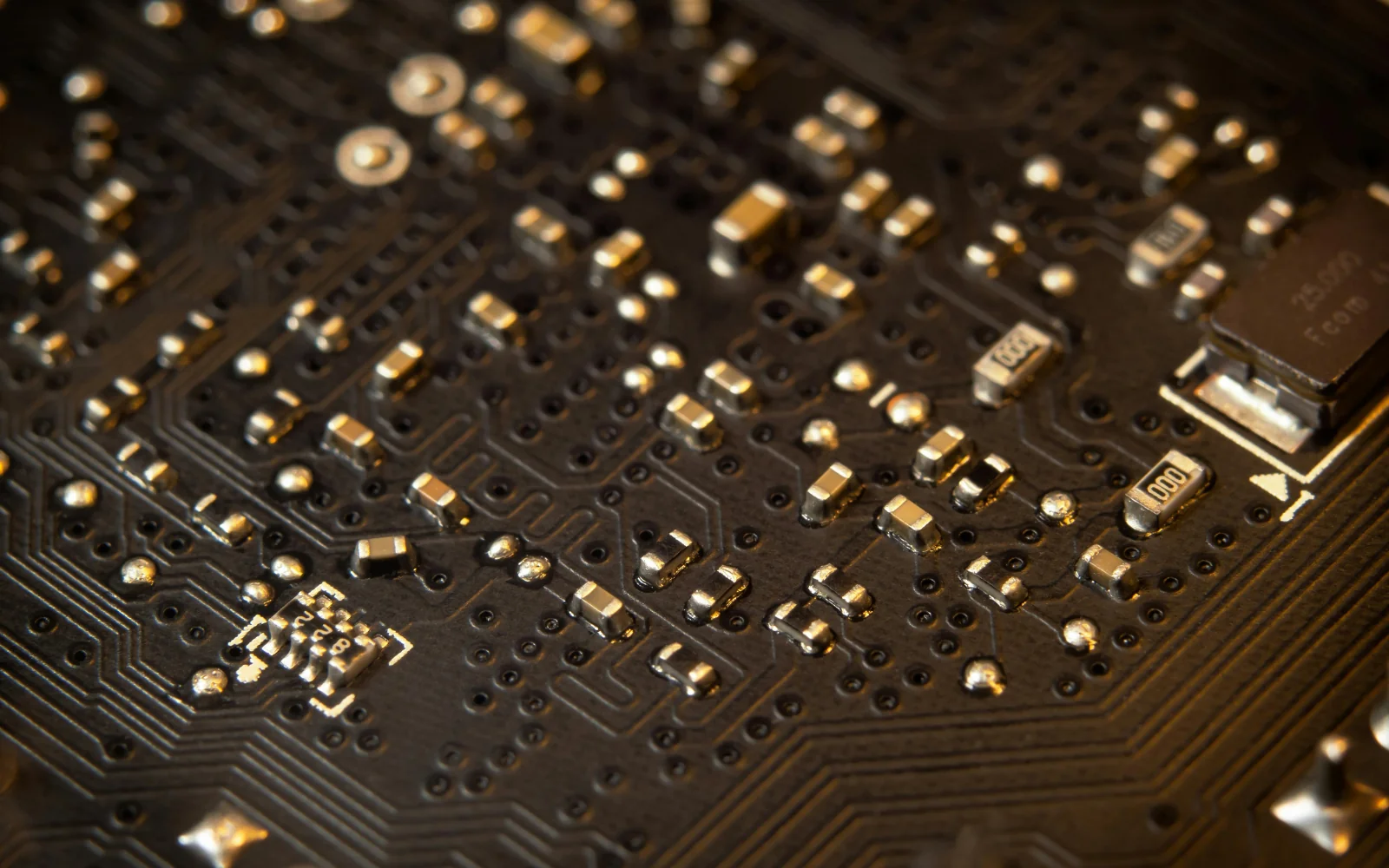
Representative photograph · Dense signal routing and components on a circuit board.
THE ENGINEERING SCOPE
Baseline database, requested change, failing paths and signoff setup.
Equivalence scope, timing regressions, physical checks and revision consistency.
ECO scripts, changed artifacts, comparison reports and closure summary.
CLIENT GUIDE
Use these technical checkpoints to make the first project review productive.
HOW WE WORK
The initial review establishes the baseline using baseline database, requested change, failing paths and signoff setup. Record gaps and dependencies before implementation.
Carry out the agreed work against the reviewed baseline. For eco and closure, keep the interfaces and configuration used by this stage visible to the receiving team.
Retain the intermediate artifacts and review equivalence scope, timing regressions, physical checks and revision consistency. Investigate failures before using these results as an input to the next stage.
Package ECO scripts, changed artifacts, comparison reports and closure summary. Review unresolved findings against the agreed acceptance criteria and assign ownership for follow-up.
PROJECT DECISIONS
Use these gates to agree readiness, review evidence and responsibility at each stage.
Are the starting inputs complete enough to proceed?
Baseline database, requested change, failing paths and signoff setup.
Record input revisions, missing material and who can resolve each dependency.
Has the work addressed the agreed technical objective?
Apply controlled design changes while checking their functional and implementation impact.
Keep the intermediate artifacts with review comments and the decisions that changed the design.
Can the result be reproduced and interpreted?
Equivalence scope, timing regressions, physical checks and revision consistency.
Capture the configuration, expected result, observed result and unresolved findings.
Can the receiving team use the delivery package?
ECO scripts, changed artifacts, comparison reports and closure summary.
Review build or execution instructions, known limitations and ownership of follow-up actions.
INPUTS & OUTPUTS
The final statement of work defines the scope and acceptance criteria.
TECHNICAL DECISIONS
Apply controlled design changes while checking their functional and implementation impact.
The work starts from baseline database, requested change, failing paths and signoff setup. The team should identify the authoritative revision of each input and record any assumptions needed to proceed. This prevents a later result from being interpreted against a different specification or configuration.
A fix on one path can introduce hold or routing issues elsewhere.
The review centres on equivalence scope, timing regressions, physical checks and revision consistency. Each finding should identify the input revision, observed behaviour and supporting evidence. Distinguish a confirmed defect from a configuration issue, an unsupported case or an open engineering question before deciding how to resolve it.
The practical sequence is: define the ECO; implement changes; compare behaviour; rerun affected analyses. Intermediate reviews allow the client to resolve decisions while changes are still manageable. If an input changes, identify the affected activities and repeat the checks that depend on it.
The expected package comprises ECO scripts, changed artifacts, comparison reports and closure summary. Acceptance criteria should specify what the receiving team needs to reproduce, inspect or integrate these artifacts. Include known limitations and outstanding actions in that package, rather than assuming that delivery of a file implies acceptance.
Physical implementation starts with consistency between the logical design, constraints and technology views. Review clock definitions, generated clocks, I/O delays, operating modes and exceptions before interpreting timing. A missing constraint can make a report appear healthier while leaving a real path unevaluated. Record the library and extraction corners used so results from different stages can be compared on the same basis.
Floorplan decisions influence routing, clock distribution and power delivery together. Reserve space for macro access, power connections, congestion relief and the paths that need predictable delay. A local timing improvement may add buffering, increase switching power or create routing pressure elsewhere. Review these effects across the agreed modes and corners instead of accepting an improvement in one summary number.
As the design moves from placement through clock construction and routing, replace estimates with the appropriate extracted evidence. Classify violations by cause and ownership. An ECO should carry its logical intent, the affected paths, implementation changes and the checks that must be repeated. The release checklist should identify required reports and any formally accepted exceptions; the presence of a layout file alone is not a signoff decision.
An added pipeline register may improve a setup path while creating short hold paths and changing clock-tree loading. Compare both setup and hold at the agreed corners, review new buffering and check routing and power effects. Retain before-and-after reports from a controlled baseline. This illustrative example explains review scope; it does not promise a particular power, performance or area result.
BEFORE WE BEGIN
A clear conversation is the start of a strong engineering relationship.
The starting review needs baseline database, requested change, failing paths and signoff setup. Share the current revision and known limitations so the scope reflects the actual design state.
The statement of work can define ECO scripts, changed artifacts, comparison reports and closure summary. The final package should include review results and any open actions.
A fix on one path can introduce hold or routing issues elsewhere.
The first work package can be a review of the available inputs and the engineering questions that must be resolved. Agree its boundaries, access requirements and expected findings before committing to a larger implementation. A review should leave an actionable list of decisions, dependencies and next steps.
Tie each finding to the relevant revision and supporting evidence. A change should identify the affected interfaces, activities and checks. Confirm its effect on scope and delivery with the responsible owner. At handoff, distinguish closed findings, accepted limitations and open work so that a file transfer is not mistaken for technical acceptance.
PUT THE WORKFLOW IN CONTEXT
Practical reading to help prepare your project discussion. Studies are illustrative; they do not report client results.
Reviewing a congested floorplan before timing closure ↗YOUR NEXT CHAPTER STARTS HERE
Bring us your engineering challenge.
Let’s define the path from idea to implementation.