
June 17, 2026 · Avecas Technologies
Chiplet Architecture: Redefining Modern Semiconductor Design
The semiconductor industry is entering a new era where traditional monolithic chip designs are facing major challenges in scaling, cost, performance, and manufacturing complexity. As transistor scaling approaches physical and economic limitations, engineers are exploring advanced approaches to continue improving computing capabilities.
One of the most transformative innovations shaping the future of semiconductor design is Chiplet Architecture. Instead of building a complete system on a single large silicon die, chiplet-based designs divide complex systems into smaller, specialized blocks called chiplets and integrate them together using advanced packaging technologies.
Chiplet architecture is changing how processors, AI accelerators, data center hardware, and high-performance computing systems are designed by enabling greater flexibility, scalability, and efficiency.
What is Chiplet Architecture?
Chiplet architecture is a semiconductor design approach where a large integrated circuit is created by combining multiple smaller silicon dies, each performing a specific function.
In traditional monolithic chip design, all components such as CPU cores, memory controllers, input/output interfaces, and accelerators are fabricated on a single large die. As chip sizes increase, manufacturing becomes more expensive and yield decreases due to the higher probability of defects.
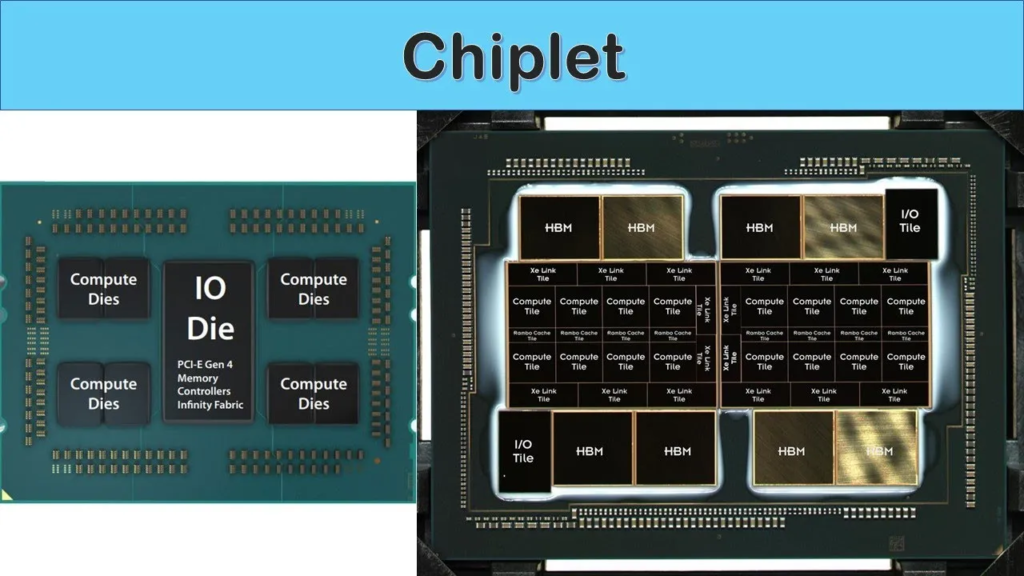
Chiplet-based designs overcome these limitations by separating the system into smaller building blocks:
- Compute chiplets – Handle processing workloads and core operations
- Memory chiplets – Manage high-speed memory access
- I/O chiplets – Provide connectivity and communication interfaces
- Specialized accelerator chiplets – Support AI, graphics, networking, or security tasks
These chiplets are connected together inside an advanced package, functioning as a single powerful system.
Why Chiplet Architecture is Becoming Important?
The demand for higher computing performance from artificial intelligence, cloud computing, autonomous systems, and advanced electronics has pushed conventional chip scaling to its limits.
Chiplet architecture addresses several semiconductor industry challenges:
Improved Manufacturing Efficiency
Large monolithic dies are difficult and expensive to manufacture. A small defect can make an entire large chip unusable.
With chiplets, smaller dies are easier to manufacture, improving production yield and reducing overall cost.
Better Design Flexibility
Chiplets allow engineers to reuse existing silicon blocks across different products. A company can combine different chiplets to create multiple product variations without designing a complete chip from scratch.
Faster Innovation Cycles
Instead of redesigning an entire processor, designers can upgrade individual chiplets. This helps semiconductor companies bring new technologies to market faster.
Advanced Technology Integration
Different chiplets can use different manufacturing processes. For example, high-performance logic may use a leading-edge node, while analog or I/O components may use mature process technologies.
How Chiplet-Based Systems Work
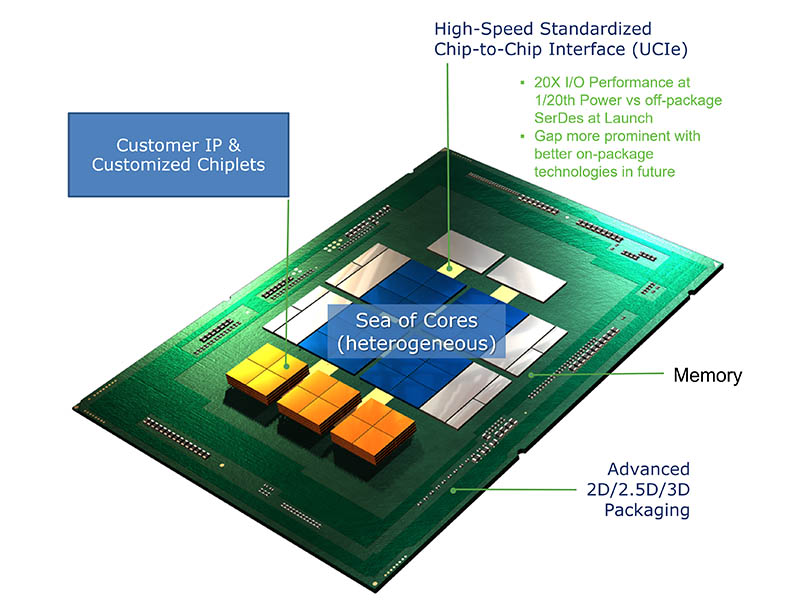
A chiplet-based system depends on advanced packaging technologies that allow multiple dies to communicate efficiently.
The chiplets are placed on an interposer or advanced substrate and connected through high-speed communication links.
Important components include:
Interconnect Technologies
Chiplets require extremely fast communication between different dies. Advanced interconnect solutions enable low-latency data transfer.
Examples include:
- High-density silicon interconnects
- Die-to-die communication links
- Advanced packaging connections
2.5D and 3D Integration
Chiplet designs often use advanced packaging approaches:
2.5D Integration
- Multiple chiplets are placed side-by-side on an interposer
- Provides high bandwidth communication
3D Integration
- Chiplets are stacked vertically
- Enables shorter connections and higher density
These technologies help create compact and powerful semiconductor systems.
Chiplets in Modern Applications
Chiplet architecture is becoming a key technology across multiple industries.
Artificial Intelligence and Machine Learning
AI workloads require massive computing power and memory bandwidth. Chiplets allow designers to combine specialized AI accelerators, processing units, and memory technologies into a single package.
Data Centers and Cloud Computing
Modern servers require scalable processors with high performance and energy efficiency. Chiplet-based processors provide flexibility for building customized server architectures.
High-Performance Computing
Supercomputers and advanced computing platforms benefit from chiplets because they enable greater processing capability without relying only on transistor scaling.
Consumer Electronics
Future smartphones, gaming systems, and edge devices can use chiplets to integrate advanced computing, graphics, connectivity, and AI features efficiently.
Challenges and Future of Chiplet Technology
Although chiplet architecture provides many advantages, it also introduces new engineering challenges.
Thermal Management
Multiple dies inside a package generate significant heat. Efficient cooling techniques are required to maintain reliability and performance.
Design Complexity
Connecting multiple chiplets requires advanced system-level design, verification, and communication standards.
Testing Challenges
Testing individual chiplets and the final assembled package requires advanced semiconductor testing methods.
Standardization
A major challenge is ensuring chiplets from different vendors can work together. Industry-wide standards are being developed to improve interoperability.
As the ecosystem matures, chiplet technology is expected to become a foundation for future semiconductor innovation.
Conclusion: The Future of Semiconductor Design
Chiplet architecture represents a major shift in semiconductor engineering by moving beyond traditional single-die designs toward modular and scalable systems.
By improving manufacturing efficiency, enabling customization, reducing development time, and supporting advanced integration, chiplets are helping the semiconductor industry overcome the limitations of conventional scaling.
As AI, cloud computing, and next-generation electronics continue to grow, chiplet-based architectures will play a critical role in creating the high-performance chips of the future.
Looking to build hands-on VLSI skills? CourseTron offers industry-aligned courses in VLSI design, verification, and semiconductor engineering.