
June 20, 2026 · Avecas Technologies
Photonic Integrated Circuits (PICs): The Future of High-Speed Computing and Communication
Photonic Integrated Circuits (PICs) are advanced semiconductor devices that integrate optical components and electronic circuits on a single chip to process and transmit information using light (photons) instead of only electrical signals.
Similar to traditional Integrated Circuits (ICs), PICs combine multiple functions such as lasers, waveguides, modulators, detectors, and optical switches into a compact chip.
PIC technology is becoming important for next-generation applications requiring ultra-high speed, low power consumption, and massive data transfer.
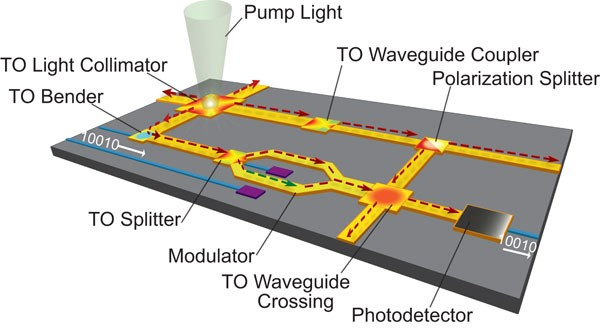
How Do PICs Work?
PICs use photons to carry data through optical paths built inside the chip.
Key components include:
- Laser Sources – Generate light signals for communication.
- Optical Waveguides – Guide light across the chip.
- Modulators – Convert electrical data into optical signals.
- Photodetectors – Convert received light back into electrical signals.
- Optical Switches – Control the direction of optical signals.
The combination of these components enables faster communication with reduced energy loss compared to traditional electrical interconnects.
Why Are PICs Important in Modern Technology?
As semiconductor devices become smaller, traditional electrical connections face challenges like signal delay, heat generation, and power consumption.
PICs help overcome these limitations by providing:
- Higher bandwidth – Enables faster data movement.
- Lower power usage – Reduces energy required for communication.
- Less heat generation – Improves system efficiency.
- Long-distance communication – Supports high-speed optical networks.
PICs are becoming a key technology for AI systems, data centers, and advanced computing platforms.
PICs in Semiconductor and AI Applications
Modern AI workloads require enormous data processing capabilities. PICs support these demands by improving communication between chips and computing units.
Major applications include:
- AI Accelerators – Faster data transfer between processing units.
- Optical Interconnects – Replacing electrical links inside high-performance systems.
- Data Centers – Managing increasing internet and cloud workloads.
- Quantum Computing – Supporting optical control and communication systems.
Photonic technologies are helping build the next generation of efficient computing architectures.
Challenges and Future of PIC Technology
Although PICs offer many advantages, some challenges remain:
- Complex manufacturing processes
- Integration with existing electronic chips
- High fabrication costs
- Need for improved packaging technologies
Future developments focus on silicon photonics, advanced packaging, and chiplet based optical systems to make PICs more affordable and widely adopted.
Conclusion
Photonic Integrated Circuits represent a major shift in semiconductor technology by combining light based communication with traditional electronics.
With the growing demand for AI, cloud computing, and high-speed networks, PICs are expected to play a critical role in creating faster, smaller, and more energy efficient systems.
PICs are not just improving today’s chips they are shaping the future of computing.
Looking to build hands-on VLSI skills? CourseTron offers industry-aligned courses in VLSI design, verification, and semiconductor engineering.